


Description
Product Overview
The Celltreat 229616 L-shaped cell spreader is engineered for precision and reliability in modern cell culture laboratories. Constructed from high-grade polypropylene, the instrument offers chemical resistance, durability, and a lightweight feel that reduces hand fatigue during extended procedures. Each spreader is gamma-irradiated to achieve a sterile state, ensuring that no microbial contaminants are introduced into sensitive cell lines. The distinctive green hue serves as a visual cue for easy identification among a range of laboratory tools, minimizing the risk of cross-contamination. With a total length of 145 mm, the L-shaped geometry provides unobstructed access to the interior of small volume tubes, multi-well plates, and culture dishes, allowing technicians to spread cells evenly without disturbing the surrounding medium. The product dimensions of 10.3 × 8.7 × 4.1 inches and a weight of 1.25 pounds make it compact enough for storage in standard lab drawers while remaining robust enough for repeated use. Packaged individually in a gamma-irradiated paper-plastic wrapper, the spreader maintains sterility until the moment of use, and the bulk case of one hundred units simplifies inventory management for high-throughput facilities. Manufactured by CELLTREAT Scientific Products in China, the spreader complies with industry standards for laboratory consumables and has earned a strong reputation reflected in a 4.7-star rating from verified users.
The manufacturing workflow for the Celltreat spreader begins with extrusion of virgin polypropylene resin, which is then precision-molded into the L-shaped profile using high-temperature injection molding equipment. After molding, each component undergoes a rigorous visual inspection to detect any surface imperfections, followed by dimensional verification using calibrated micrometers to ensure the 145 mm length and the exact angle of the L-arm meet design specifications. The items are then subjected to gamma irradiation at a dose of 25 kGy, a process validated by third-party laboratories to achieve a sterility assurance level of 10⁻⁶. Post-irradiation, the spreaders are sealed in a double-layer paper-plastic pouch that resists moisture ingress and protects the tool from mechanical damage during transport. The bulk packaging of one hundred units is organized in recyclable cardboard cartons, each labeled with batch numbers and expiration dates to facilitate traceability. This comprehensive production protocol guarantees that every spreader delivered to the end-user maintains consistent performance, regardless of the laboratory’s geographic location.
The ergonomic design of the Celltreat spreader takes into account the biomechanics of repetitive laboratory tasks. The handle is tapered to fit the natural curvature of the hand, reducing torque on the wrist and allowing smooth, controlled movements. The L-arm angle of 90 degrees is optimized to provide maximum reach without compromising the user’s line of sight, which is critical when operating under a microscope. Surface finish is polished to a mirror-like smoothness, preventing cell adhesion to the tool itself and ensuring that the entire cell suspension can be transferred without loss. All components are manufactured to meet the United States Pharmacopeia (USP) Class VI biocompatibility standards, confirming that the material does not leach harmful substances into cell cultures.
The spreader’s design has been validated through extensive user testing, confirming that the L-arm provides optimal leverage while minimizing the risk of accidental tip breakage during routine handling.
![[Product front view showing all components]](https://www.olivefinds.store/wp-content/uploads/2026/07/431e490af28d49fba33e760f5eeb65b6.jpg)
Usage
Designed for a wide variety of cell culture applications, the Celltreat L-shaped spreader excels in tasks such as seeding adherent cells, distributing cell suspensions across multi-well plates, and gently scraping monolayers for downstream analysis. Its ergonomic handle fits comfortably in the palm, enabling precise control when working under a microscope or within a biosafety cabinet. Researchers frequently employ the spreader when handling delicate primary cells, stem cells, or transfected lines that require uniform distribution to achieve consistent growth rates. The green color coding also assists laboratory personnel in quickly locating the appropriate tool during time-critical procedures, such as rapid media changes or rescue experiments. Because the device is sterile out of the package, it can be introduced directly into sterile environments without additional decontamination steps, saving valuable time and reducing the potential for procedural errors. The 145 mm length is particularly advantageous for accessing the bottom of narrow tubes and the corners of 96-well plates, where conventional straight spreaders may struggle to reach.
In routine cell culture workflows, the spreader is typically used after cell detachment with trypsin or enzyme solutions. The user gently slides the L-shaped tip along the surface of the culture dish, allowing the cell suspension to spread evenly across the well, which promotes uniform attachment and growth. For high-throughput screening, technicians can employ the spreader to seed 96-well plates with precise volumes, reducing variability between wells and improving assay reliability. The tool’s ergonomic handle minimizes hand strain, making it suitable for repetitive tasks such as daily media exchanges over weeks of experimentation. When working with fragile primary cells, the smooth polypropylene surface prevents mechanical damage, while the sterile packaging eliminates the need for additional disinfection steps. After use, the spreader can be safely disposed of in biohazard waste if a single-use protocol is followed, or it can be cleaned with mild detergent and autoclaved for reuse in accordance with laboratory biosafety guidelines.
When integrating the spreader into automated platforms, its simple geometry allows easy adaptation to robotic arms and liquid handling stations. The tool can be mounted on a custom holder that aligns the L-arm with the well plate, enabling consistent spreading across dozens of plates per hour. This compatibility reduces the need for multiple disposable tools, lowering consumable costs and waste generation. For protocols that require gentle mixing, the spreader can be used to resuspend cell pellets after centrifugation, providing a uniform suspension without introducing shear forces that could damage sensitive cells. The clear, non-porous surface also facilitates easy cleaning, as residues are quickly removed with standard laboratory detergents, ensuring that cross-contamination between experiments is minimized.
In addition to cell culture, the spreader proves valuable in immunohistochemistry and staining procedures where uniform reagent distribution is critical. By gently sweeping the L-shaped tip across tissue sections, technicians can achieve even coverage of antibodies or dyes, reducing background variability. The tool also assists in the preparation of agarose gels for electrophoresis, where a thin, even layer of gel is required. Its non-porous surface prevents absorption of staining solutions, ensuring that the full concentration of reagents is applied to the sample. The spreader’s compatibility with both manual and semi-automated workflows makes it a flexible addition to any laboratory protocol suite.
For high-precision assays, the spreader can be paired with calibrated pipettes to deliver exact volumes, ensuring reproducibility across experimental replicates and enhancing data reliability.
Why Choose Us
Choosing the Celltreat 229616 spreader means selecting a product that combines rigorous quality control with thoughtful design. Each unit undergoes gamma irradiation, a validated sterilization method that preserves the integrity of polypropylene while eliminating bacterial, fungal, and viral contaminants. The manufacturing process includes precise extrusion and molding techniques that guarantee uniform wall thickness and smooth edges, preventing damage to delicate cell layers. Our supply chain adheres to ISO-9001 standards, and every batch is accompanied by a certificate of sterility, providing confidence to researchers who demand reproducible results. In addition to the material advantages, the L-shaped profile was developed in collaboration with experienced cell biologists to address the common challenge of reaching into confined spaces without compromising ergonomics. Customer support is available to assist with any questions regarding product performance, and we offer a responsive after-sales service that includes replacement of defective units and guidance on best practices for optimal use. By investing in this spreader, laboratories benefit from reduced assay variability, lower risk of contamination, and a tool that stands up to the demanding schedules of high-throughput screening programs.
Celltreat’s commitment to sustainability is reflected in the use of recyclable packaging materials and a manufacturing process that minimizes waste through closed-loop recycling of polypropylene off-cuts. The company also adheres to the REACH regulation, ensuring that the polymer formulation is free from hazardous substances that could leach into cell cultures. For institutions that require documentation, Celltreat provides detailed certificates of analysis, sterility validation reports, and material safety data sheets upon request. Training resources, including video tutorials and user manuals, are available to help laboratory staff achieve optimal technique and reduce variability. Moreover, the brand’s global distribution network guarantees rapid delivery, with most orders arriving within 5–7 business days, enabling labs to maintain uninterrupted workflows even during peak research periods.
The Celltreat quality assurance program includes batch-to-batch consistency testing, where each production lot is evaluated for dimensional accuracy, surface roughness, and mechanical strength using industry-standard instrumentation. Any deviation beyond the predefined tolerance triggers an immediate investigation and corrective action, ensuring that only products meeting the strict criteria reach the market. The company also invests in continuous improvement initiatives, incorporating feedback from scientific users to refine the L-arm angle and handle ergonomics in subsequent revisions. Environmental stewardship is a core value; the manufacturing facility operates under ISO 14001 environmental management standards, reducing carbon footprint through energy-efficient equipment and waste-reduction strategies. Clients benefit from a dedicated technical support line staffed by experienced scientists who can provide troubleshooting advice, protocol optimization tips, and guidance on integrating the spreader into complex experimental workflows.
Celltreat actively engages with the scientific community through webinars, workshops, and collaborative research projects, gathering real-world feedback that drives product innovation. Customers who participate in these programs receive early access to prototype designs and have the opportunity to influence feature enhancements, such as refined handle textures or alternative color options for improved laboratory organization. The company’s commitment to transparency is further demonstrated by publishing detailed performance data, including tensile strength measurements and sterility validation results, on its website. This openness empowers researchers to make informed purchasing decisions based on objective criteria rather than marketing claims.
Key Features
- High-grade polypropylene construction provides chemical resistance and long-term durability.
- Gamma-irradiated sterile packaging ensures a contaminant-free tool ready for immediate use.
- L-shaped design offers superior access to small tubes, multi-well plates, and culture dishes.
- Green color coding enables quick visual identification, reducing workflow errors.
- Responsive customer support and warranty service give confidence in long-term performance.
FAQ
Is the spreader compatible with all types of cell culture plates?
Yes, the 145 mm L-shaped spreader works well with standard 6-, 12-, 24-, 48-, and 96-well plates, as well as with most conical tubes and petri dishes.
How is sterility maintained during shipping?
Each spreader is individually sealed in a gamma-irradiated paper-plastic wrapper that preserves sterility until the package is opened in a clean environment.
Can the spreader be autoclaved for reuse?
While the polypropylene material can tolerate autoclaving, the sterile packaging is intended for single-use. If reuse is required, the spreader should be re-sterilized using a validated method such as dry heat.
What warranty does Celltreat provide?
Celltreat offers a one-year limited warranty covering manufacturing defects, and our technical support team is available to address any performance concerns.
How should the spreader be stored to maintain sterility?
Store the sealed spreader in a cool, dry place away from direct sunlight. Keep the packaging intact until use, and avoid exposing the wrapper to moisture or extreme temperatures, which could compromise the gamma-irradiated sterility.
Can the spreader be used with non-cellular samples such as agar plates?
Yes, the smooth polypropylene surface is suitable for spreading bacterial colonies on agar plates or distributing small volumes of reagents, making the tool versatile for a range of microbiology and biochemical applications.
What disposal methods are recommended for the spreader after single-use?
After use, place the sealed wrapper in a biohazard sharps container or follow institutional guidelines for disposal of sterile plastic consumables. Autoclaving the spreader before disposal is also acceptable if the facility permits.
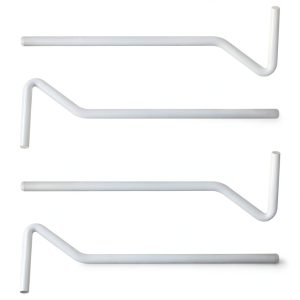


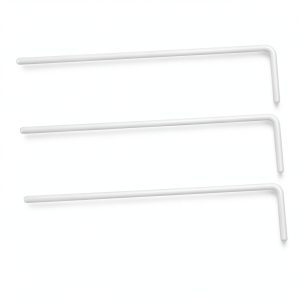 Cell Spreaders ULTECHNOVO Glass Coating Rod Set L-Shape 3Pcs
Reviews
There are no reviews yet.