
Description
Product Overview
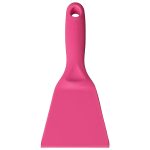
The Celltreat 229617 L-shaped cell spreader is engineered from high-grade polypropylene that has been sterilized through gamma irradiation, guaranteeing a pyrogen-free surface suitable for sensitive cell culture work. Measuring 145 mm in overall length, the tool offers a compact footprint while providing enough leverage for smooth, even distribution of cell suspensions across a variety of vessel sizes, from 35 mm petri dishes to 96-well plates. Its green color-coding not only distinguishes it from other laboratory utensils but also reduces the risk of cross-contamination by making it instantly recognizable in a busy bench environment.
The L-shaped geometry is specifically designed to reach into tight corners and narrow wells where a straight-edge spreader would struggle to make contact. The flexible arm bends gently without compromising structural integrity, allowing technicians to spread cells with consistent pressure across the entire surface area. This design minimizes the formation of bubbles and uneven cell layers, which are common sources of experimental variability in assays such as immunofluorescence staining, colony formation, and high-throughput screening.
Each spreader is individually wrapped in a sterile paper-plastic sleeve that can be opened quickly without the need for additional sterilization steps. The packaging complies with ISO 13485 standards for medical device manufacturing, ensuring that the product remains contaminant-free until the moment of use. The case of 500 units is ideal for laboratories that require a reliable supply chain, reducing the frequency of re-ordering and helping to maintain consistent workflow continuity.
The polypropylene material offers excellent chemical resistance, allowing the spreader to be used with a wide range of cell culture media, buffers, and reagents without degradation. It is also autoclavable, providing an additional layer of flexibility for labs that prefer steam sterilization as a secondary safety measure. The tool’s durability has been validated through repeated cycles of use and cleaning, demonstrating a lifespan that exceeds typical laboratory consumable expectations.
From a regulatory perspective, the Celltreat 229617 spreader meets the United States Pharmacopeia (USP) standards for non-pyrogenic laboratory equipment, and its manufacturing origin in the United States ensures compliance with stringent quality control protocols. The product’s best-seller rank within the Lab Cell Scrapers & Spreaders sub-category reflects its acceptance among researchers who prioritize precision, sterility, and ease of handling in their daily protocols.
![[Product front view showing all components]](https://www.olivefinds.store/wp-content/uploads/2026/08/a1fec990f79f48df8cd29c880982ec45.jpg)
Usage
In routine cell culture procedures, the spreader is employed to evenly distribute cell suspensions after trypsinization or when seeding cells for confluency-dependent experiments. Its L-shaped tip can be gently pressed against the bottom of a flask or dish, allowing the user to glide the tool across the surface while maintaining a uniform layer of cells. This is particularly valuable when working with adherent cell lines that require even attachment to avoid localized over-growth.
The spreader also proves useful in specialized applications such as wound-healing assays, where a consistent scratch must be created across a monolayer, and in three-dimensional culture systems where precise placement of cell droplets is essential. Researchers in microbiology, immunology, and pharmacology can integrate the tool into protocols that involve plating of bacteria, fungi, or primary immune cells, benefiting from its sterile barrier and non-reactive surface.
Because the device is color-coded green, it integrates seamlessly into color-based inventory systems that separate tools for different cell lines or experimental conditions. Laboratories that operate under Good Laboratory Practice (GLP) guidelines can assign the green spreader to a specific set of experiments, thereby simplifying documentation and traceability during audits.
The ergonomic handle of the spreader is designed to reduce hand fatigue during prolonged use, making it suitable for high-throughput environments where technicians may need to process dozens of plates in a single shift. Its lightweight construction (approximately 2.69 pounds per case) ensures that bulk handling and storage do not impose additional logistical burdens.
Why Choose Us
Choosing the Celltreat 229617 spreader means selecting a product that combines rigorous sterility assurance with thoughtful ergonomic design. The gamma-irradiated packaging eliminates the need for on-site sterilization, saving valuable time and reducing the risk of introducing contaminants during preparation.
Our commitment to quality is reflected in the use of medical-grade polypropylene, a material known for its low extractable profile and resistance to leaching, which is critical when working with sensitive cell lines. This material choice also contributes to the tool’s long-term durability, allowing it to withstand repeated cycles of use and cleaning without cracking or warping.
Manufactured in the United States, each batch undergoes comprehensive testing for dimensional accuracy, surface smoothness, and sterility verification. These quality checks ensure that every spreader performs consistently, delivering the same level of precision across all experiments, regardless of the laboratory’s scale.
In addition to product performance, Celltreat provides responsive technical support and a clear return policy for any units that do not meet the stated specifications. Our customer service team is available to answer queries about optimal usage, compatibility with various media, and best practices for maintaining sterility throughout the workflow.
Key Features
- Made from gamma-irradiated polypropylene, the spreader offers a sterile, non-pyrogenic surface that protects delicate cell cultures from contamination.
- L-shaped flexible arm reaches into tight wells and corners, ensuring even cell distribution and reducing bubble formation.
- Green color-coding provides instant visual identification, streamlining inventory management and minimizing mix-ups in multi-user labs.
- Ergonomic handle reduces hand fatigue during high-throughput plating, improving efficiency for technicians handling large numbers of plates.
- US-based manufacturing with ISO-compliant quality checks guarantees consistent performance, and our dedicated support team assists with any product-related questions.
FAQ
Can the spreader be autoclaved after use?
Yes, the Celltreat 229617 spreader can be safely autoclaved. The polypropylene material is designed to withstand standard autoclave cycles of 121°C for 15‑20 minutes without deformation or loss of structural integrity. Autoclaving provides an additional sterility assurance step for laboratories that require it, and the gamma-irradiated packaging can be removed prior to the cycle. After autoclaving, allow the spreader to cool in a sterile environment before handling to maintain its contaminant‑free status.
What is the recommended storage condition for the sterile packaging?
The sterile packaging should be stored in a cool, dry place away from direct sunlight and sources of heat. Ideal storage temperature ranges from 15°C to 25°C (59°F to 77°F) with relative humidity below 60%. Keeping the packages in a sealed cabinet or drawer protects them from dust and airborne contaminants, preserving the sterility until the moment of use. Avoid storing near chemicals or solvents that could off‑gas and compromise the packaging integrity.
Is the green color‑coding compatible with other laboratory color‑coding systems?
Absolutely. The green hue of the Celltreat spreader follows the standard ANSI color‑coding conventions used in many laboratories to differentiate tools and reagents. It can be easily integrated into existing color‑based inventory schemes, whether the lab uses green for cell‑related equipment, safety equipment, or specific experimental groups. The consistent shade ensures that staff can quickly locate the spreader without confusion, even in environments with multiple color‑coded items.
How many times can the spreader be reused before replacement is needed?
While the spreader is designed for repeated use, the recommended lifespan depends on the frequency of use and the cleaning protocols employed. Under typical laboratory conditions—where the tool is cleaned with mild detergents, rinsed thoroughly, and optionally autoclaved—it can reliably endure 50 to 100 cycles before any signs of wear appear. Users should inspect the L‑shaped arm for micro‑cracks or surface roughness that could affect cell distribution, and replace the spreader if any damage is observed to maintain experimental integrity.
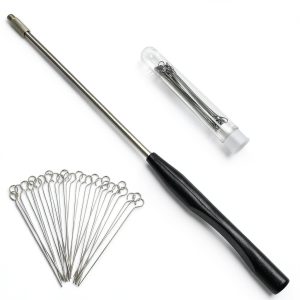
 Argos L0010-1 Yellow Polystyrene Inoculating Loops 10µL 250 Pack
 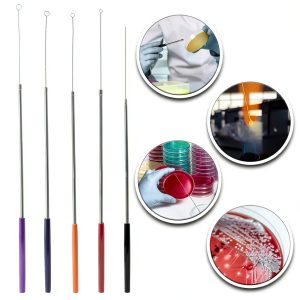 Reusable Inoculating Loops – Surgical Design Color‑Coded Handles
Reviews
There are no reviews yet.